Knee replacement surgery can be an option for people experiencing significant knee pain and reduced mobility caused by advanced joint damage.
For many patients, however, the decision to undergo surgery raises an important concern: What will recovery actually involve?
Understanding rehabilitation, mobility restrictions and the gradual return to daily activities can help patients prepare more realistically.
If you are considering knee replacement surgery in Turkey, planning your recovery is just as important as understanding the operation itself.
What Happens During Knee Replacement Surgery?
Knee replacement, also called knee arthroplasty, involves replacing damaged joint surfaces with artificial components.
The procedure is commonly performed in patients with advanced osteoarthritis who continue to experience pain and difficulty with everyday activities despite appropriate non-surgical treatment.
During a total knee replacement, damaged surfaces of the thighbone and shinbone are prepared and resurfaced with prosthetic components.
A plastic spacer helps the new joint surfaces move against one another.
In selected patients, partial knee replacement may be considered when damage is limited to one area of the joint.
The appropriate procedure depends on the condition of the knee, ligament stability and other clinical factors.
The First 24–48 Hours After Surgery
Early movement is an important part of modern knee replacement recovery.
Depending on the patient's condition, anaesthesia, pain control and surgical plan, assisted standing and walking may begin on the day of surgery or shortly afterwards.
A physiotherapist may help the patient:
Stand safely
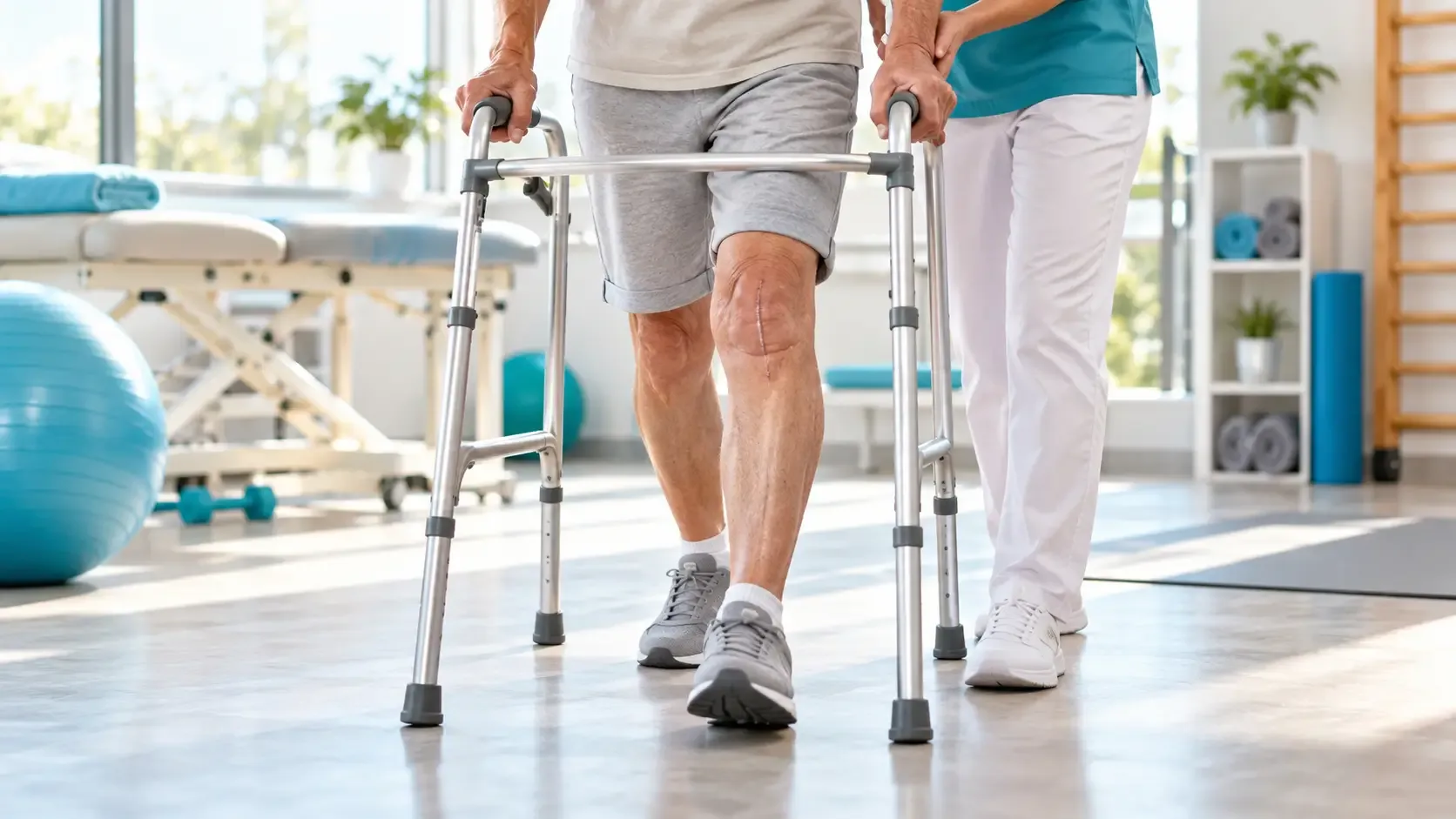
Walk with a suitable mobility aid
Begin gentle knee movements
Practise basic daily activities
Understand postoperative precautions
Pain and swelling are expected after surgery, but they should be monitored and managed according to the medical team's instructions.
The early rehabilitation plan also aims to reduce complications associated with prolonged immobility.
The First Two Weeks: Managing Pain and Swelling
During the initial recovery period, patients usually focus on wound care, swelling management and regaining basic mobility.
Walking aids such as crutches or a walker may be necessary.
Patients are generally encouraged to perform exercises prescribed by their physiotherapist and increase activity gradually.
Recovery should not be measured by how quickly someone stops using walking aids.
Instead, the priorities are safe movement, adequate pain control, wound healing and steady progress.
It is also important to follow instructions regarding medication, particularly any prescribed treatment intended to reduce the risk of blood clots.
Weeks Three to Six: Improving Mobility
As recovery progresses, rehabilitation typically becomes more focused on improving strength, balance and range of motion.
Exercises may target the quadriceps, hamstrings and other muscles supporting the knee.
Patients may gradually become more comfortable with activities such as walking, standing from a chair and using stairs.
However, recovery is not identical for everyone.
Age, preoperative mobility, general health, muscle strength and existing medical conditions can all influence progress.
Some patients regain independence relatively quickly, while others require additional rehabilitation.
When Can You Return to Normal Activities?
Many patients resume a range of routine daily activities within several weeks, although fuller functional recovery can take several months.
Driving depends on factors such as which knee was operated on, reaction time, strength, pain control and whether medications affect alertness.
Returning to work also varies.
Someone with a desk-based occupation may be able to return sooner than a person whose job involves prolonged standing, lifting or physically demanding movements.
Higher-impact sports and activities may remain unsuitable after knee replacement.
Your surgeon should explain which activities are appropriate for your particular implant and overall condition.
Why Is Physiotherapy Important?
Physiotherapy plays a central role in recovery after knee replacement surgery.
A structured rehabilitation programme helps restore strength, improve joint movement and rebuild confidence during daily activities.
Exercises must be adjusted to individual progress.
Attempting to force movement through significant pain or progressing too quickly may be counterproductive.
Equally, avoiding movement entirely can contribute to stiffness and weakness.
The aim is controlled, consistent rehabilitation under professional guidance.
Possible Complications and Warning Signs
Although knee replacement surgery is commonly performed, it carries risks.
Potential complications include infection, blood clots, wound problems, stiffness, nerve or blood vessel injury and implant-related issues.
Patients should seek prompt medical advice if they develop increasing wound redness, drainage, fever, worsening pain or unusual swelling.
Sudden breathlessness or chest pain requires emergency medical assessment.
Recognising warning signs and knowing whom to contact are important parts of discharge planning.
Travelling After Knee Replacement Surgery in Turkey
International patients should discuss their travel arrangements with their surgical team before booking return flights.
Long journeys and limited mobility may affect blood clot risk after surgery.
Travel clearance depends on medical recovery, postoperative complications, mobility and the duration of the journey.
Patients should also understand their follow-up arrangements, including who will provide care after returning to their home country.
A realistic treatment plan should include appropriate postoperative assessment and rehabilitation arrangements.
Knee Replacement Surgery in Antalya
If you are considering knee replacement surgery in Turkey, an orthopaedic evaluation can help establish whether surgery is appropriate.
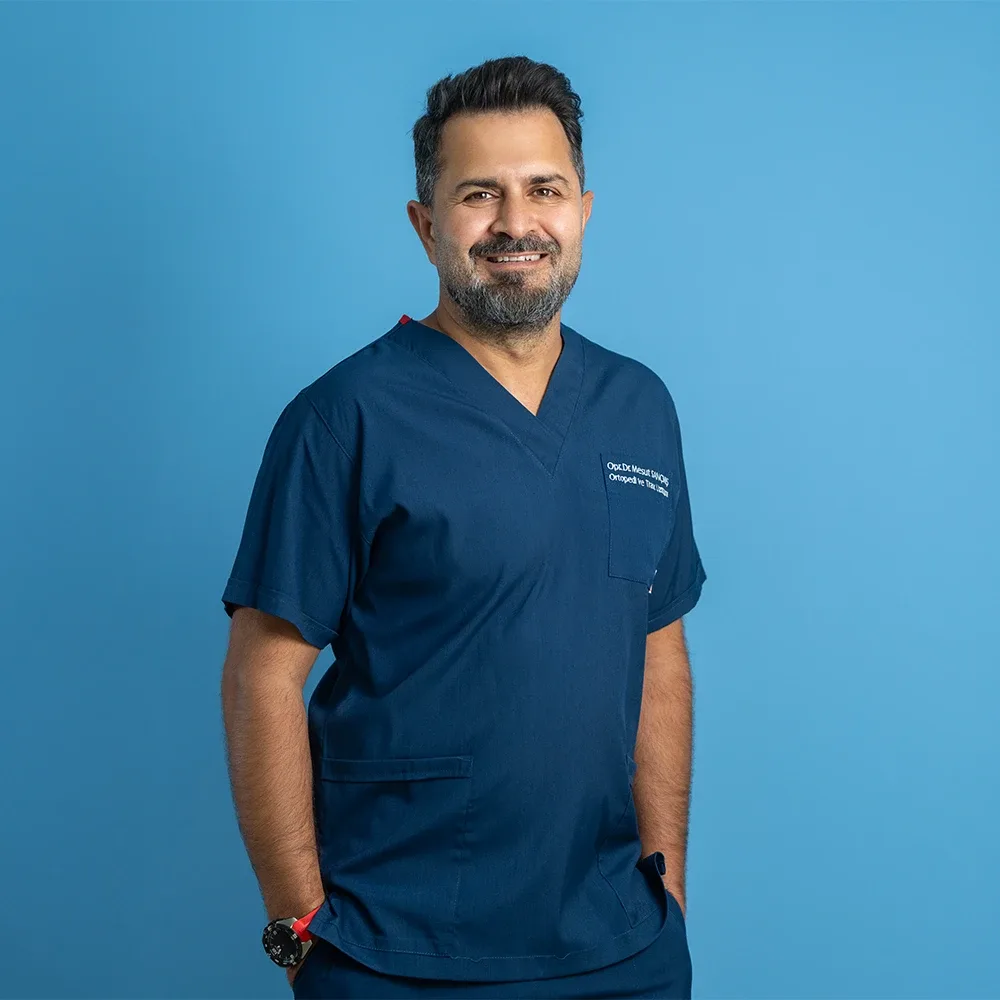
At Dr. Mesut Sançmış's practice in Antalya, patients can request a consultation to discuss knee symptoms, imaging findings and potential treatment options.
The decision to undergo knee replacement should always be based on an individual clinical assessment.
Considering knee replacement in Antalya, Turkey? Contact Dr. Mesut Sançmış to discuss your condition and request an orthopaedic consultation.
Medical note: Recovery timelines are approximate. Your surgeon's individual postoperative instructions take priority over general information.